Off-Grid Solar Systems – The Complete UK Buyer’s Guide
Introduction
Looking to generate your own electricity where there is no mains power. Off-grid solar systems provide a reliable, cost-effective and sustainable way to produce and store renewable energy for properties that are not connected to the National Grid, or for anyone seeking greater energy independence.
Whether you’re powering a remote cabin, farm building, workshop, garden office, motorhome, narrowboat or an off-grid home, choosing the correct combination of solar panels, batteries, charge controllers and inverters is essential to achieving dependable year-round performance. Every off-grid system is unique, and selecting compatible components ensures your system is efficient, reliable and capable of meeting your daily energy requirements. If you’re new to solar energy, our Create Your Own Solar System Guide explains how these components work together before you begin selecting equipment.
At Solar PV Systems, we specialise in supplying high-quality off-grid solar equipment for domestic, commercial, agricultural and leisure applications throughout the UK. Our extensive product range includes complete off-grid solar kits, solar panels, solar batteries, charge controllers, off-grid inverters, solar panel mounting systems and all the accessories required to build or expand a standalone solar power system.
Looking for a complete solution
Browse our range of Complete Off-Grid Solar Kits, or build your own system from our range of solar panels, batteries, charge controllers, inverters and mounting systems.
This comprehensive guide explains everything you need to know about off-grid solar systems, including how they work, the components required, how to size a system correctly, and how to choose equipment that suits your application. Whether you’re installing a small system for lighting and battery charging or designing a larger renewable energy solution for continuous power, this guide will help you make informed decisions before purchasing your equipment.
Throughout this guide, you’ll find links to our related product categories, making it easy to explore compatible components and build an off-grid solar system tailored to your individual requirements.
On This Page
- What Is an Off-Grid Solar System
- How Does an Off-Grid Solar System Work
- Components of an Off-Grid Solar System
- How to Size an Off-Grid Solar System
- MPPT vs PWM Charge Controllers
- Choosing the Right Off-Grid Solar System
- Typical Off-Grid Applications
- Example Off-Grid System Sizes
- Benefits of Off-Grid Solar Systems
- Frequently Asked Questions
- Common Mistakes When Buying an Off-Grid Solar System
- Related Products
- Need Help Choosing
What Is an Off-Grid Solar System
Unlike a grid-connected solar system, an off-grid installation must generate and store all the electricity required for everyday use. This makes careful system design and component selection essential for long-term reliability.
An off-grid solar system is a standalone renewable energy system that generates, stores and supplies electricity independently of the National Grid. Unlike grid-connected solar installations, an off-grid system does not rely on mains electricity and is designed to provide power wherever a grid connection is unavailable, impractical or simply not required.
Electricity is generated by solar panels during daylight hours and regulated by a charge controller before being stored in solar batteries. When electricity is needed, an off-grid inverter converts the stored direct current (DC) power into alternating current (AC), allowing standard household appliances and electrical equipment to operate safely and efficiently.
Off-grid solar systems can be designed for a wide range of applications, from small systems powering lighting, battery charging and remote monitoring equipment to larger installations capable of supplying homes, workshops, agricultural buildings and commercial premises. Every system is configured according to the energy requirements of the application, ensuring the correct balance between solar generation, battery storage and inverter capacity.
One of the greatest advantages of an off-grid solar system is energy independence. By generating and storing your own electricity, you can reduce or eliminate the need for expensive grid connections while benefiting from a reliable source of renewable energy. This makes off-grid solar an ideal solution for remote properties, holiday cabins, farms, stables, workshops, garden offices, motorhomes, caravans, narrowboats and many other locations where dependable power is required.
The following simplified diagram shows how the main components of an off-grid solar system work together to generate, store and supply electricity.
☀️ Solar Panels
↓
Charge Controller
↓
Solar Battery Bank
↓
Off-Grid Inverter
↓
⚡ AC Electricity
↓
Lights • Appliances • Equipment
This simple process forms the basis of every off-grid solar installation. Each component has a specific role, and selecting compatible equipment is essential to maximise efficiency, protect the batteries and provide reliable power throughout the year.
How Does an Off-Grid Solar System Work
The size of the battery bank and solar array should always be based on your expected daily energy consumption rather than the number of appliances alone.
An off-grid solar system works by generating electricity from sunlight, storing surplus energy in batteries and supplying power whenever it is needed. Unlike a grid-connected solar system, there is no connection to the National Grid, so every component must work together to provide a reliable and continuous supply of electricity throughout the day and night.
During daylight hours, solar panels capture sunlight and convert it into direct current (DC) electricity. The amount of electricity generated depends on several factors, including the size of the solar array, the orientation and angle of the panels, weather conditions and the time of year. Even on cloudy days, modern solar panels continue to generate electricity, although at a lower output than in full sunshine.
The electricity produced by the solar panels passes to a charge controller. This component regulates the charging process, protecting the batteries from overcharging and excessive discharge while helping to maximise battery life. Choosing the correct charge controller is essential for efficient system performance, particularly on larger installations where Maximum Power Point Tracking (MPPT) technology can significantly improve energy harvest.
The regulated electricity is then stored within the solar battery bank. Batteries act as the energy reserve for the system, storing surplus electricity generated during the day so that it can be used during the evening, overnight or whenever solar production is low. Battery capacity is one of the most important factors when designing an off-grid system, as it determines how long the system can operate without additional solar generation.
When electrical appliances require power, the off-grid inverter converts the stored DC electricity from the batteries into alternating current (AC) electricity suitable for standard household appliances, tools and equipment. A correctly sized inverter ensures that appliances start and operate reliably while delivering stable power to the electrical system.
Throughout the year, an off-grid solar system continually balances electricity generation, battery charging and energy consumption. During the summer months, longer daylight hours generally allow batteries to recharge more quickly, while winter conditions often require larger battery reserves or additional solar capacity to maintain reliable performance. Careful system design is therefore essential to ensure adequate energy is available throughout the seasons.
For this reason, every off-grid solar installation should be designed around the expected daily energy consumption, available roof or ground space, battery storage requirements and future expansion plans. Selecting compatible solar panels, batteries, charge controllers, inverters and mounting systems helps ensure efficient operation, long equipment life and dependable performance for many years.
| Stage | What Happens |
|---|---|
| Solar panels | Generate electricity |
| Charge controller | Protects batteries |
| Battery bank | Stores electricity |
| Inverter | Converts DC to AC |
| Appliances | Use the electricity |
Components of an Off-Grid Solar System
Every off-grid solar system is made up of several essential components that work together to generate, store, regulate and supply electricity. Selecting compatible, correctly sized equipment is one of the most important aspects of designing a reliable standalone solar power system.
Although the exact specification will vary depending on your energy requirements, most off-grid solar installations include the following core components:
➡ Solar Panels PV panels – SolarPVSystems
➡ Solar Batteries Off Grid Batteries – SolarPVSystems
➡ Charge Controllers Off Grid Charge Controller – SolarPVSystems
➡ Off-Grid Inverters Off grid inverter – SolarPVSystems
➡ Solar Panel Mounting Systems Solar panel mounting – SolarPVSystems
➡ Cables, Connectors and Electrical Protection Off grid accessories – SolarPVSystems
Solar Panels
Solar panels capture energy from sunlight and convert it into direct current (DC) electricity. They provide the primary source of power for the system and determine how much energy can be generated throughout the day. The number, size and efficiency of the panels should be selected according to your daily energy consumption, available installation space and seasonal sunlight levels.
Solar Batteries
Solar batteries store surplus electricity generated during daylight hours, allowing energy to be used during the evening, overnight or during periods of poor weather. Battery capacity is a key factor in determining how long an off-grid system can operate without additional solar generation. Choosing the correct battery technology and storage capacity helps maximise system performance and reliability.
Charge Controllers
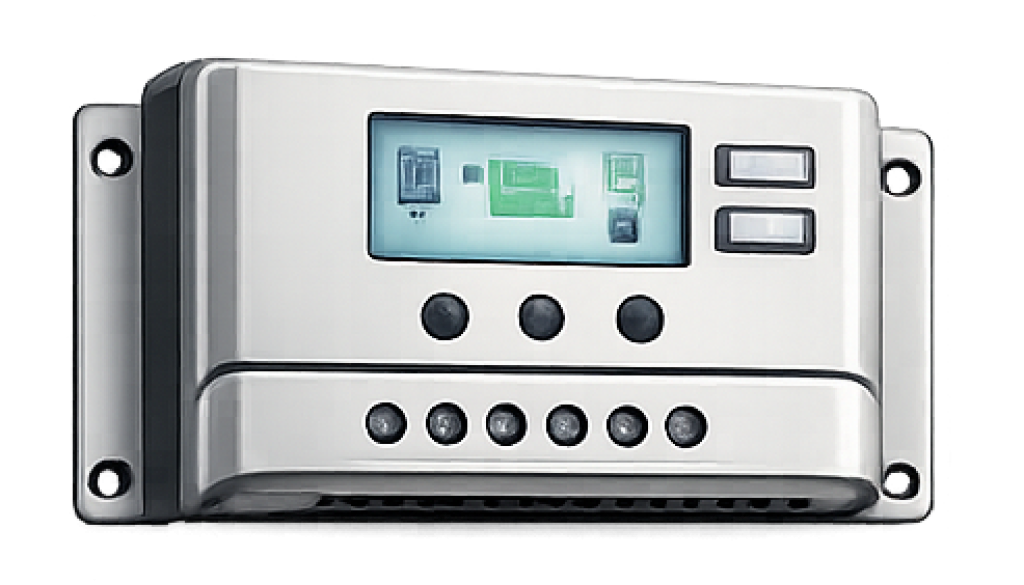
The charge controller regulates the flow of electricity between the solar panels and the battery bank. It prevents batteries from being overcharged or excessively discharged while ensuring they charge as efficiently as possible. Selecting the correct controller is essential for protecting your investment and extending battery life.
MPPT vs PWM Charge Controllers
Most modern off-grid systems use either a Maximum Power Point Tracking (MPPT) controller or a Pulse Width Modulation (PWM) controller. MPPT controllers are generally more efficient and can significantly increase energy harvest, particularly during colder weather or when using higher-voltage solar arrays. PWM controllers remain a practical solution for smaller, lower-cost systems with modest power requirements.
The differences between these technologies are explained in more detail in this guide.
| MPPT | PWM |
|---|---|
| Higher efficiency | Lower cost |
| Better in winter | Basic systems |
| Larger arrays | Smaller arrays |
| Faster charging | Simpler design |
Off-Grid Inverters
Off-grid inverters convert the direct current (DC) electricity stored within the batteries into alternating current (AC) electricity used by most household appliances, tools and electrical equipment. Choosing an inverter with sufficient continuous and surge power is essential to ensure reliable operation of your electrical loads.
Solar Panel Mounting Systems
A solar panel mounting system provides the structural framework that securely supports the solar panels. Selecting the correct mounting system depends on whether the panels are installed on a pitched roof, flat roof or ground-mounted framework. A correctly designed mounting system helps maximise panel performance while ensuring long-term structural stability.
Cables, Connectors and Electrical Protection
Alongside the major components, every off-grid installation requires suitable solar cables, MC4 connectors, fuses, circuit breakers, isolators and other electrical protection devices. These components ensure the system operates safely, complies with good electrical practice and remains easy to maintain throughout its service life.
Each of these components performs a specific function, but it is the way they work together that determines the overall performance, reliability and lifespan of an off-grid solar system. In the following sections, we’ll look at each component in greater detail and explain how to choose the right equipment for your application.
| Component | Purpose |
|---|---|
| Solar Panels | Generate electricity |
| Batteries | Store electricity |
| Charge Controller | Regulates charging |
| Inverter | Converts DC to AC |
| Mounting | Holds panels |
| Protection | Keeps system safe |
How to Size an Off-Grid Solar System
One of the most common questions asked by customers is, “What size off-grid solar system do I need?” The answer depends on how much electricity you use each day rather than simply the size of the property or the number of appliances.
Designing an off-grid solar system involves balancing solar generation, battery storage and inverter capacity to provide reliable electricity throughout the year. Oversizing the system can increase costs unnecessarily, while undersizing may leave you without enough power during periods of poor weather or high energy demand.
| Appliance | Watts | Hours | Daily Use |
|---|---|---|---|
| TV | 90W | 4 | 360Wh |
| Laptop | 60W | 5 | 300Wh |
| Lights | 40W | 5 | 200Wh |
Total
860Wh/day
Step 1
Calculate energy
↓
Step 2
Choose batteries
↓
Step 3
Choose solar panels
↓
Step 4
Choose inverter
↓
Step 5
Choose controller
Step 1 – Calculate Your Daily Energy Consumption
Begin by listing every appliance you intend to use and estimate how many hours it will operate each day.
For each appliance, multiply:
Power (Watts) × Hours Used = Daily Energy (Watt-hours)
For example:
| Appliance | Power | Hours | Daily Energy |
|---|---|---|---|
| LED Lighting | 40W | 5 | 200Wh |
| Refrigerator | 100W | 10 | 1,000Wh |
| Laptop | 60W | 4 | 240Wh |
| Television | 90W | 3 | 270Wh |
Total Daily Consumption = 1,710Wh (1.71kWh)
This figure becomes the foundation of your system design.
A typical off-grid solar system consists of several key components working together:
- Solar panels to generate electricity from sunlight.
- Charge controllers to regulate battery charging and protect the batteries.
- Solar batteries to store energy for use during periods of low sunlight or at night.
- Off-grid inverters to convert stored DC electricity into usable AC power.
- Solar panel mounting systems to securely support the solar panels.
- Cables, connectors and electrical protection equipment to safely connect and protect the entire system.
Selecting compatible components is essential to achieving reliable performance, long battery life and efficient energy generation. Throughout this guide, we’ll explain the purpose of each component and provide practical guidance to help you choose equipment that suits your application and expected energy usage.
Choose Battery Storage
The battery bank stores electricity generated during the day for use overnight and during periods of poor weather.
Most off-grid systems are designed with between one and three days of battery autonomy depending on the application.
For example:
- Weekend cabin – 1 day
- Garden office – 1–2 days
- Remote home – 2–3 days
- Critical backup systems – 3 days or more
Larger battery banks provide greater resilience but also increase the overall cost of the installation. Choosing the correct balance depends on your expected usage, local weather conditions and available budget.
Size the Solar Array
Your solar panels must generate enough electricity to replace the energy used each day while also recharging the batteries.
Factors affecting solar panel output include:
- Roof orientation
- Roof pitch
- Shading
- Geographic location
- Seasonal daylight hours
- Weather conditions
Because solar production is much lower during winter, many off-grid systems are designed around winter performance rather than summer output. This ensures the system remains reliable throughout the year.
Select the Correct Charge Controller
The charge controller regulates the flow of electricity from the solar panels into the battery bank.
The controller must be correctly matched to:
- Solar panel voltage
- Battery voltage
- Maximum charging current
- Total solar array capacity
For larger installations, MPPT (Maximum Power Point Tracking) charge controllers generally provide higher efficiency and improved energy harvest, particularly during colder weather or when using higher-voltage solar arrays.
Choose the Correct Inverter
The inverter converts the battery’s DC electricity into standard AC electricity suitable for household appliances.
When selecting an inverter, consider:
- Continuous output power
- Peak or surge power
- Battery voltage (12V, 24V or 48V)
- Future expansion
Some appliances, including refrigerators, pumps and power tools, require a high surge current when starting. Choosing an inverter with adequate surge capacity helps prevent nuisance shutdowns and ensures reliable operation.
Consider Future Expansion
Many customers add additional appliances after their system has been installed.
Planning for future expansion may include:
- Larger battery banks
- Additional solar panels
- Higher-capacity inverter
- Spare mounting rail space
Allowing for future growth during the initial design stage often reduces installation costs later.
Choosing the Right Off-Grid Solar System
Choosing the right off-grid solar system starts with understanding how much electricity you need each day. Rather than selecting equipment based on the number of solar panels alone, your system should be designed around your daily energy consumption, the appliances you intend to power and the number of days of battery backup you require.
When planning an off-grid installation, consider the following:
- Your average daily electricity consumption (Wh or kWh)
- Whether the system will be used all year round or seasonally
- Available roof or ground space for solar panels
- Local weather conditions and winter sunlight levels
- Battery storage capacity
- Future expansion requirements
A small system designed for lighting and USB charging has very different requirements to one supplying a remote home with refrigeration, water pumps and household appliances. Selecting compatible components from the outset helps improve efficiency, reliability and long-term performance while making future upgrades easier.
Solar PV Systems has supplied off-grid renewable energy equipment throughout the UK for many years. Our product range has been developed to support domestic, agricultural, commercial and leisure installations, helping customers select compatible components for reliable standalone power systems.
Do you have mains electricity.
YES
│
Grid Connected /
Hybrid Solar
NO
│
Off-Grid Solar
│
What do you need to power?
│
Lighting
Cabin
Workshop
Farm
House
Boat
Motorhome
Answering these questions will help you determine the most suitable off-grid solar system for your application.
Do you have mains electricity
| Question | Recommendation |
|---|---|
| Do you have access to mains electricity | If yes, a grid-connected or hybrid system may be suitable. If no, continue with an off-grid system. |
| What do you need to power | Lighting, appliances, pumps, refrigeration or a complete property. |
| How much electricity do you use each day | Calculate your daily energy consumption in Wh or kWh. |
| How many days of battery backup do you require | Size the battery bank accordingly. |
| Where will the panels be installed | Roof-mounted or ground-mounted. |
↓
YES
Grid connected
↓
NO
Off Grid
↓
How much power?
↓
Lighting
↓
100W
↓
Cabin
↓
600W
↓
House
↓
3kW
Remote Cabins
Off-grid solar systems provide reliable electricity for cabins without the cost of a mains electricity connection. Typical applications include lighting, refrigeration, water pumps, televisions, Wi-Fi equipment and battery charging.
Farms and Agricultural Buildings
Solar power is widely used on farms to provide electricity for electric fencing, livestock monitoring, irrigation controls, workshops, CCTV systems and remote buildings.
Garden Offices and Workshops
Where extending a mains supply is expensive or impractical, an off-grid solar system can provide dependable power for lighting, laptops, charging equipment and small tools.
Motorhomes, Caravans and Campervans
Compact solar systems allow leisure batteries to be charged while travelling, helping power lighting, refrigeration, USB devices and inverters.
Boats and Narrowboats
Solar panels reduce reliance on engine charging while maintaining battery levels for navigation equipment, lighting, refrigeration and onboard electrical systems.
| Application | Typical Daily Use | Suggested Solar Array | Battery Storage |
|---|---|---|---|
| Shed Lighting | 200–500 Wh | 100–200 W | 100 Ah |
| Garden Office | 1–2 kWh | 400–800 W | 200–400 Ah |
| Cabin | 2–4 kWh | 800–1,500 W | 400–600 Ah |
| Farm Gate / CCTV | 100–300 Wh | 50–150 W | 100 Ah |
| Motorhome | 1–2 kWh | 300–600 W | 200–300 Ah |
| Remote Home | 5–10 kWh | 3–5 kW | 10–20 kWh |
These figures are illustrative. Actual requirements depend on your energy consumption, location, season and equipment.
- Energy independence
- No grid connection charges
- Reduced electricity costs
- Renewable energy generation
- Reliable power in remote locations
- Low maintenance
- Modular and easy to expand
- Quiet operation compared with generators
- Reduced reliance on fossil fuels
Benefits of Off-Grid Solar Systems
- Complete energy independence
- No expensive grid connection charges
- Lower long-term electricity costs
- Renewable, low-carbon electricity
- Reliable power for remote locations
- Quiet operation compared with generators
- Low maintenance
- Modular and easy to expand
- Suitable for homes, cabins, farms and leisure vehicles
- Reduces reliance on fossil fuels
Example Off-Grid Solar System Sizes
Small Shed = 100W panel with 100Ah battery
Garden Office = 600W panels with 300Ah battery
Cabin = 1.5kW panels with 600Ah battery
Remote Home = 5kW panels with 15kWh battery
Related Products
You may also be interested in:
- Complete Off-Grid Solar Kits
- Solar Panels
- Off-Grid Batteries
- Charge Controllers
- Off-Grid Inverters
- Solar Panel Mounting Systems
- Solar Cables & Connectors
- Battery Monitors
- DC Protection Equipment
| Category | Description |
|---|---|
| Complete Off-Grid Kits | Ready-to-install systems |
| Solar Panels | Monocrystalline panels |
| Solar Batteries | Lithium & AGM batteries |
| Charge Controllers | MPPT & PWM |
| Off-Grid Inverters | Pure sine wave |
| Mounting Systems | Roof & ground mounting |
Frequently Asked Questions
What size off-grid solar system do I need
The correct system size depends on your daily electricity consumption, battery backup requirements and available space for solar panels. Calculating your daily energy usage is the first step in designing an efficient system.
Can an off-grid solar system power a house
Yes. A correctly designed off-grid solar system can supply an entire home, provided the solar array, battery storage and inverter are appropriately sized for the property’s electrical demand.
Do off-grid solar systems work during winter
Yes, but electricity generation is reduced due to shorter daylight hours and lower solar intensity. Systems intended for year-round use should be designed with sufficient battery storage and solar capacity to meet winter demand.
How long do solar batteries last
Battery lifespan depends on the battery technology, depth of discharge, operating temperature and charging practices. Modern lithium batteries can often provide many years of reliable service when used within the manufacturer’s recommended operating limits.
What’s the difference between MPPT and PWM charge controllers
MPPT controllers automatically optimise the voltage from the solar panels, increasing charging efficiency and energy harvest. PWM controllers are simpler and often suitable for smaller systems with lower power requirements.
Can I add more solar panels later
In many cases, yes. However, your charge controller, inverter, battery bank and mounting system must be capable of supporting the additional capacity. Planning for future expansion during the initial installation is recommended.
What inverter size should I choose
Your inverter should comfortably support both the continuous power requirements of your appliances and any higher surge currents needed when motors or compressors start. Always allow a safety margin rather than selecting the minimum possible size.
Can I use lithium batteries in an off-grid solar system
Yes. Lithium batteries are increasingly popular because they offer high efficiency, faster charging, longer service life and greater usable capacity compared with many traditional battery technologies.
Do I need planning permission for an off-grid solar system
Many domestic solar installations can be installed under permitted development rights. However, planning requirements vary depending on the property, location and installation type. You should always check the latest local planning guidance before starting any project.
Energy Independence
Generate and store your own electricity without relying on the National Grid, making your property less vulnerable to power outages and rising energy prices.
No Grid Connection Costs
Avoid the significant expense of installing a new grid connection to remote buildings or rural properties.
Renewable Electricity
Produce clean electricity from sunlight, reducing carbon emissions and dependence on fossil fuels.
Can Solar PV Systems help me choose the right equipment
Yes. Solar PV Systems supplies a wide range of off-grid solar products and can help customers select compatible solar panels, batteries, charge controllers, inverters and mounting systems suitable for their individual applications.
Common Mistakes When Buying an Off-Grid Solar System
Choosing an off-grid solar system involves much more than simply selecting solar panels. Every component must work together to provide dependable electricity throughout the year. Avoiding the following common mistakes can improve system performance, reduce long-term costs and extend the life of your equipment.
Underestimating Daily Energy Usage
Many systems are undersized because customers only estimate their electricity consumption. Calculating the actual daily energy usage of every appliance provides a far more accurate basis for system design.
Choosing Too Little Battery Storage
The battery bank determines how long the system can operate without sunshine. Insufficient battery capacity may result in frequent deep discharging, reducing battery life and increasing the likelihood of power shortages during poor weather.
Buying an Inverter That Is Too Small
Some appliances require several times their normal operating power when starting. Refrigerators, pumps and power tools can all create short-duration surge loads. Selecting an inverter with sufficient surge capacity helps prevent unexpected shutdowns.
Ignoring Winter Performance
Solar panels generate considerably less electricity during winter than in summer. Designing a system based only on summer conditions often results in insufficient energy during colder months. Year-round systems should always be sized with winter performance in mind.
Choosing the Wrong Charge Controller
The charge controller must be compatible with both the solar array and the battery bank. Larger systems generally benefit from MPPT technology, which provides greater charging efficiency and improved performance under changing weather conditions.
Not Allowing for Future Expansion
Many installations grow over time as additional appliances are added. Choosing equipment that allows future expansion can reduce upgrade costs and provide greater flexibility.
Buying Components That Are Not Compatible
Voltage, charging characteristics and equipment ratings must all be compatible. Mixing unsuitable components can reduce efficiency, shorten battery life and increase the risk of equipment failure.
Focusing Only on Initial Cost
The cheapest components do not always provide the best long-term value. High-quality solar panels, batteries, charge controllers and inverters often deliver greater efficiency, improved reliability and longer service life, resulting in a lower overall cost of ownership.
Carefully selecting compatible equipment and designing your system around realistic energy requirements will help ensure dependable performance for many years. If you are unsure which products best suit your application, Solar PV Systems can help you choose components that work together efficiently, whether you are building a small standalone system or a larger off-grid installation.
Why Buy Your Off-Grid Solar Equipment from Solar PV Systems
- Over 20 years’ renewable energy experience
- UK supplier
- Carefully selected products
- Wide stock availability
- Complete off-grid systems
- Individual replacement components
- Fast UK delivery
- Technical product guidance
- Trusted manufacturers
Need Help Choosing an Off-Grid Solar System
Choosing the correct off-grid solar equipment can seem overwhelming, especially when balancing solar panel output, battery storage, inverter size and future expansion. At Solar PV Systems, we supply a comprehensive range of compatible off-grid solar products for domestic, agricultural, commercial and leisure applications throughout the UK.
Whether you’re powering a garden office, remote cabin, farm building, motorhome, narrowboat or an entire off-grid property, we can help you select the right combination of solar panels, batteries, charge controllers, inverters and mounting systems to suit your energy requirements.
Browse our complete range of off-grid solar kits, solar panels, batteries, charge controllers, off-grid inverters and mounting systems. Whether you’re powering a remote cabin, farm building, workshop, motorhome or an entire off-grid home, Solar PV Systems supplies compatible, high-quality equipment backed by over 20 years of renewable energy experience.
Links to our solar equipment guides are listed below.
- Solar PV Systems
- Solar Battery Storage
- Off-Grid Solar Systems
- Solar Panel Mounting Systems
- Solar Hot Water Systems
- Not sure what equipment you need. Read our Create Your Own Solar System Guide to understand how solar panels, batteries, inverters and mounting systems work together.
- Looking for a complete battery solution. Browse our range of Solar Home Battery Kits designed for off-grid and hybrid solar systems.
- Choosing the correct roof fixing is just as important as selecting the right panels. Our Complete Guide to Solar Panel Mounting Systems explains the different roof fixing options available.